Evolusi Virus Influenza: Mengapa Kita Perlu Vaksin Baru Setiap Tahun
Menelusuri mekanisme evolusi virus influenza yang unik membuatnya terus berubah, menghindari imunitas, dan mengapa vaksinasi tahunan sangat penting.
Virus influenza adalah master of evolution, mampu mengubah dirinya dengan kecepatan yang membuat sistem kekebalan tubuh kita selalu tertinggal satu langkah. Kemampuan luar biasa ini menjelaskan mengapa flu musiman terus menjadi ancaman kesehatan publik meskipun kita memiliki vaksin, dan mengapa vaksin flu harus diperbarui setiap tahun.
Struktur Virus Influenza
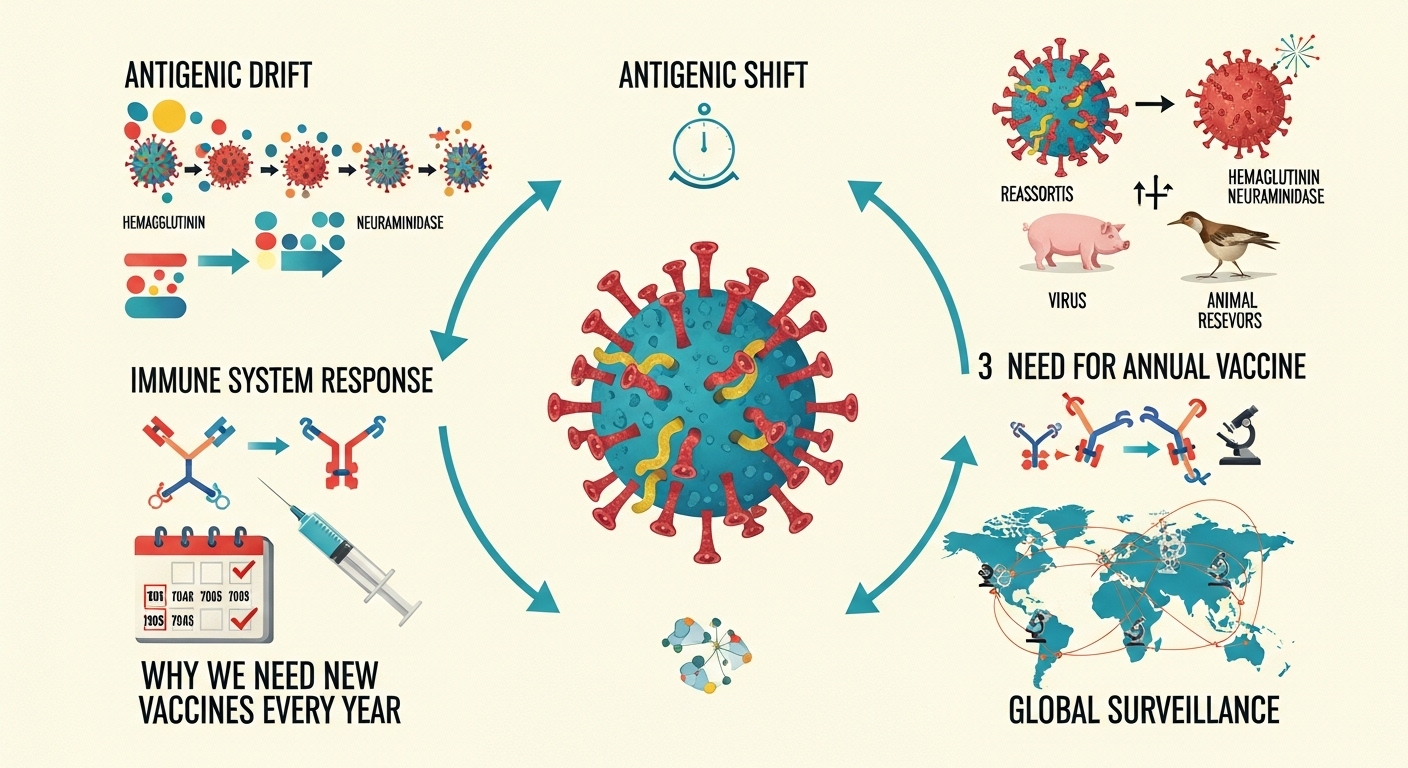
Influenza adalah RNA virus yang memiliki genom tersegmentasi - genetic material-nya terbagi dalam delapan segment terpisah. Struktur segmented ini adalah kunci kemampuan evolusinya yang extraordinary. Surface proteins, terutama hemagglutinin (HA) dan neuraminidase (NA), adalah target utama sistem imun dan yang paling sering berubah.
Hemagglutinin bertanggung jawab untuk binding virus ke sel host, langkah pertama dalam infeksi. Ada 18 subtipe HA yang berbeda (H1 hingga H18), dan antibodi yang mengenali satu subtipe mungkin tidak recognize subtipe lainnya. Neuraminidase membantu virus baru yang terbentuk escape dari sel yang terinfeksi. Ada 11 subtipe NA (N1 hingga N11).
Kombinasi HA dan NA subtypes menentukan strain influenza - misalnya H1N1 atau H3N2. Manusia primarily infected oleh H1N1 dan H3N2 influenza A, serta influenza B. Birds bisa carry semua subtypes, making mereka reservoir penting untuk viral diversity. Pigs bisa infected oleh human, avian, dan swine influenza, acting as “mixing vessel” untuk reassortment.
Antigenic Drift: Mutasi Bertahap
Antigenic drift adalah proses gradual accumulation of mutations dalam genes yang code untuk surface proteins. RNA polymerase yang copy viral genome tidak memiliki proofreading mechanism seperti DNA polymerase, resulting dalam high error rate. Setiap kali virus replicate, ada kemungkinan mutations terjadi.
Sebagian besar mutations adalah deleterious atau neutral, membuat virus less fit atau tidak mengubah properties-nya. Tetapi occasionally, mutation terjadi di HA atau NA gene yang mengubah antigen properties sambil maintaining atau bahkan enhancing viral fitness. These mutations allow virus untuk partially evade antibodies dari previous infections atau vaccinations.
Drift terjadi continuously dalam circulating strains. Dalam hitungan months hingga years, accumulated mutations bisa sufficient untuk significantly reduce effectiveness of existing antibodies. Ini menjelaskan mengapa seseorang yang sudah immune terhadap flu strain tahun lalu masih bisa infected oleh strain tahun ini - virus telah “drift” cukup jauh untuk partially escape immunity.
Antigenic Shift: Perubahan Drastis
Antigenic shift adalah sudden, major change dalam HA dan/atau NA proteins, resulting dalam new influenza A subtype yang substantially different dari currently circulating strains. Shift terjadi melalui reassortment - ketika dua different influenza viruses infect same cell, mereka bisa exchange segments of their segmented genome.
Reassortment paling concerning terjadi ketika human dan avian influenza strains co-infect satu host, typically pigs. Novel virus yang hasil dari reassortment bisa acquire avian HA atau NA subtypes yang human population tidak memiliki pre-existing immunity. Jika novel virus juga acquire ability untuk efficiently transmit between humans, ini bisa cause pandemic.
1918 Spanish flu, 1957 Asian flu, 1968 Hong Kong flu, dan 2009 H1N1 pandemic semua resulted dari antigenic shift. 1918 pandemic particularly devastating karena novel H1N1 virus memiliki virulence factors yang caused severe disease terutama di young adults. Estimated 50-100 million people died globally, more than World War I casualties.
Surveillance dan Prediksi
Global Influenza Surveillance and Response System (GISRS) adalah network of laboratories di lebih dari 100 negara yang continuously monitor influenza activity. Laboratories collect samples dari patients dengan influenza-like illness, isolate viruses, dan characterize mereka antigenically dan genetically.
Data dari surveillance digunakan untuk predict which strains akan dominant di upcoming flu season. Twice yearly, WHO convenes committees yang review surveillance data dan recommend composition untuk seasonal flu vaccines - sekali untuk Northern Hemisphere season dan sekali untuk Southern Hemisphere. Recommendations harus made months in advance untuk give manufacturers time untuk produce vaccines.
Prediction tidak always perfect. Antigenic characterization menggunakan ferret antisera tidak always correlate perfectly dengan human immune responses. Unexpected drift or emergence of new variant antara waktu recommendation dan peak flu season bisa result dalam vaccine mismatch. 2014-2015 flu season adalah example dimana vaccine effectiveness was particularly low karena circulating H3N2 viruses drifted dari vaccine strain.
Tantangan Produksi Vaksin
Traditional flu vaccine production menggunakan embryonated chicken eggs. Vaccine viruses harus adapted untuk grow efficiently dalam eggs, sometimes requiring mutations yang bisa alter antigenic properties - phenomenon called egg adaptation. Ini bisa result dalam vaccines yang less effective terhadap circulating strains yang grow dalam human cells.
Production process memakan waktu months. Setelah strains recommended, manufacturers harus first grow seed viruses, kemudian scale up production, purify, formulate, dan test vaccines. Entire process dari strain selection hingga doses available typically takes 5-6 months, leaving little room untuk adjustments jika unexpected strain emerges.
Cell-based dan recombinant flu vaccines adalah newer technologies yang circumvent some egg adaptation issues dan potentially faster untuk scale up. Cell-based vaccines grow virus dalam mammalian cells instead of eggs. Recombinant vaccines use genetic engineering untuk produce just HA protein without growing whole virus, eliminating adaptation issues entirely.
Efektivitas Vaksin yang Bervariasi
Flu vaccine effectiveness varies considerably antar seasons, typically ranging dari 20% hingga 60%. Multiple factors influence effectiveness termasuk match between vaccine dan circulating strains, characteristics of vaccinees (age, health status, prior immunity), dan specific strain characteristics. H3N2 viruses particularly prone untuk drift dan historically associated dengan lower vaccine effectiveness.
Even dalam seasons dengan good match, protection tidak absolute. Antibody levels needed untuk protection vary antar individuals dan wane over time. Cellular immunity yang induced oleh infection atau vaccination, sementara harder untuk measure, provides additional layer of protection terutama against severe disease.
Despite imperfect effectiveness, vaccination remains best tool untuk preventing flu dan its complications. Even partial protection bisa make difference between mild illness dan hospitalization atau death, particularly untuk high-risk groups seperti elderly, young children, pregnant women, dan people dengan chronic health conditions.
Varian Avian Influenza
Highly pathogenic avian influenza (HPAI) viruses seperti H5N1 dan H7N9 sporadically infect humans, usually following close contact dengan infected poultry. Mortality rates sangat tinggi - H5N1 approximately 60%, H7N9 around 40% - tetapi human-to-human transmission sangat rare. Fear adalah bahwa mutations atau reassortment bisa give these viruses ability untuk efficiently spread between humans.
Surveillance of avian influenza dalam bird populations crucial untuk early warning. Outbreaks di poultry farms result dalam culling millions of birds untuk prevent spread dan reduce risk of human exposure. Wild birds, particularly waterfowl, adalah natural reservoir untuk diverse influenza viruses dan play key role dalam long-distance spread.
Prepandemic vaccines against potentially pandemic strains seperti H5N1 telah developed dan stockpiled. Namun, antigenic variability within subtypes means stockpiled vaccines may not match well dengan actual pandemic strain jika emerge. Rapid response capabilities untuk quickly develop dan produce matched vaccines are critical pandemic preparedness components.
Influenza B: The Quieter Threat
Influenza B viruses tidak classified into subtypes tetapi divided into two lineages - B/Yamagata dan B/Victoria. B viruses undergo drift tetapi tidak shift karena tidak efficiently infect animals lain, limiting reassortment opportunities. B viruses generally cause milder disease than A viruses tetapi still significant cause of morbidity, particularly di children.
Quadrivalent flu vaccines yang include both B lineages became standard karena difficulty predicting which lineage akan dominant. Trivalent vaccines yang only included satu B lineage sometimes completely missed jika other lineage circulated, leaving vaccinees unprotected against B viruses.
Recent proposals untuk potentially eliminate influenza B melalui aggressive vaccination campaigns leverage fact bahwa humans are sole reservoir. Tanpa animal reservoir untuk hide in, theoretically possible untuk drive B viruses to extinction dengan sustained high vaccination coverage globally. Namun, logistical dan political challenges are enormous.
Imunitas Populasi dan Waning
Herd immunity untuk influenza sulit achieve karena virus’s constant evolution. Unlike diseases seperti measles dimana stable virus allows herd immunity thresholds dapat reached dengan vaccination, flu’s drift means population immunity continuously erodes sebagai new variants emerge.
Imprinted immunity - immune responses shaped oleh first flu exposure dalam childhood - influences subsequent responses throughout life. “Original antigenic sin” adalah phenomenon dimana initial exposure biases immune system toward recognizing similar strains dari childhood exposure, potentially reducing responses terhadap very different strains encountered later. Ini partially explain age-related patterns dalam who gets sick during different flu seasons.
Antibody levels wane within months setelah vaccination atau infection. By time next flu season arrives, many vaccinees have suboptimal antibody levels, particularly elderly whose immune systems respond less robustly to vaccination. Annual boosting helps maintain protective levels, tetapi timing of vaccination matters - too early dan protection may wane before peak season.
Antivirals dan Resistensi
Neuraminidase inhibitors seperti oseltamivir (Tamiflu) dan zanamivir (Relenza) are mainstay antiviral treatments untuk influenza. They block neuraminidase function, preventing newly formed viruses dari escaping infected cells. Effective ketika started within 48 hours of symptom onset, reducing illness duration dan severity.
Resistance terhadap antivirals dapat develop rapidly through mutations dalam NA gene. H1N1 viruses yang circulated before 2009 pandemic became nearly universally resistant terhadap oseltamivir. Post-pandemic H1N1 viruses reverted toward susceptibility, tetapi oseltamivir resistance sporadically detected. Surveillance for antiviral resistance crucial untuk guide treatment recommendations.
Baloxavir marboxil adalah newer antiviral dengan different mechanism - inhibits polymerase acidic protein yang essential untuk viral replication. Single-dose treatment convenient dibanding 5-day course of oseltamivir. Namun, resistance mutations can emerge during treatment, particularly di immunocompromised patients, dan long-term effectiveness remains untuk evaluated.
Universal Flu Vaccine: Holy Grail
Scientists worldwide pursuing universal flu vaccine yang would provide long-lasting protection against all atau most influenza strains, eliminating need untuk annual shots. Approaches target conserved parts of virus yang don’t change much dengan drift atau shift, seperti HA stem region atau internal proteins.
Several universal vaccine candidates dalam various stages of clinical trials show promise untuk inducing broader protection. Challenges include ensuring responses are strong enough untuk protective, particularly di elderly; preventing immune responses dari being redirected toward variable regions; dan developing suitable adjuvants dan delivery platforms.
mRNA vaccine technology yang rapidly deployed untuk COVID-19 offers exciting possibilities untuk flu vaccines. Potential untuk quickly update sequences, combine multiple antigens, dan potent immune responses could revolutionize flu vaccination. Several companies developing mRNA flu vaccines, including candidates designed untuk broader protection.
Dampak Sosial dan Ekonomi
Seasonal influenza causes estimated 290,000 to 650,000 respiratory deaths globally each year. Beyond mortality, flu responsible untuk millions of medical visits, hospitalizations, dan lost productivity. Economic burden includes direct medical costs dan indirect costs dari work absenteeism dan reduced productivity.
Flu disproportionately affects certain groups. Very young children, elderly, pregnant women, dan people dengan chronic conditions seperti asthma, diabetes, atau heart disease at higher risk untuk complications. Healthcare workers at increased risk of exposure dan play critical role dalam transmission within healthcare settings.
Pandemic influenza would have catastrophic impacts. Even mild pandemic like 2009 H1N1 caused significant disruptions. Severe pandemic comparable untuk 1918 would overwhelm healthcare systems, disrupt essential services, dan cause massive economic damage. Pandemic preparedness planning attempts untuk anticipate dan mitigate these impacts.
Lessons dari COVID-19
COVID-19 pandemic provided valuable lessons applicable untuk influenza preparedness. Importance of early surveillance dan rapid information sharing, maintaining surge capacity di healthcare systems, clear public health communication, dan ability untuk quickly develop dan deploy vaccines semua critical.
Public acceptance of seasonal flu vaccination may be influenced by COVID-19 experiences. Some people more aware of importance dari vaccination; others developed vaccine hesitancy. Understanding these attitudes dan addressing concerns crucial untuk maintaining flu vaccination coverage.
Non-pharmaceutical interventions seperti mask-wearing, social distancing, dan hygiene measures dramatically reduced flu circulation during 2020-2021 season. Sementara sustained implementation tidak realistic untuk seasonal flu, targeted use during high transmission periods atau oleh high-risk individuals could reduce impact.

Komentar