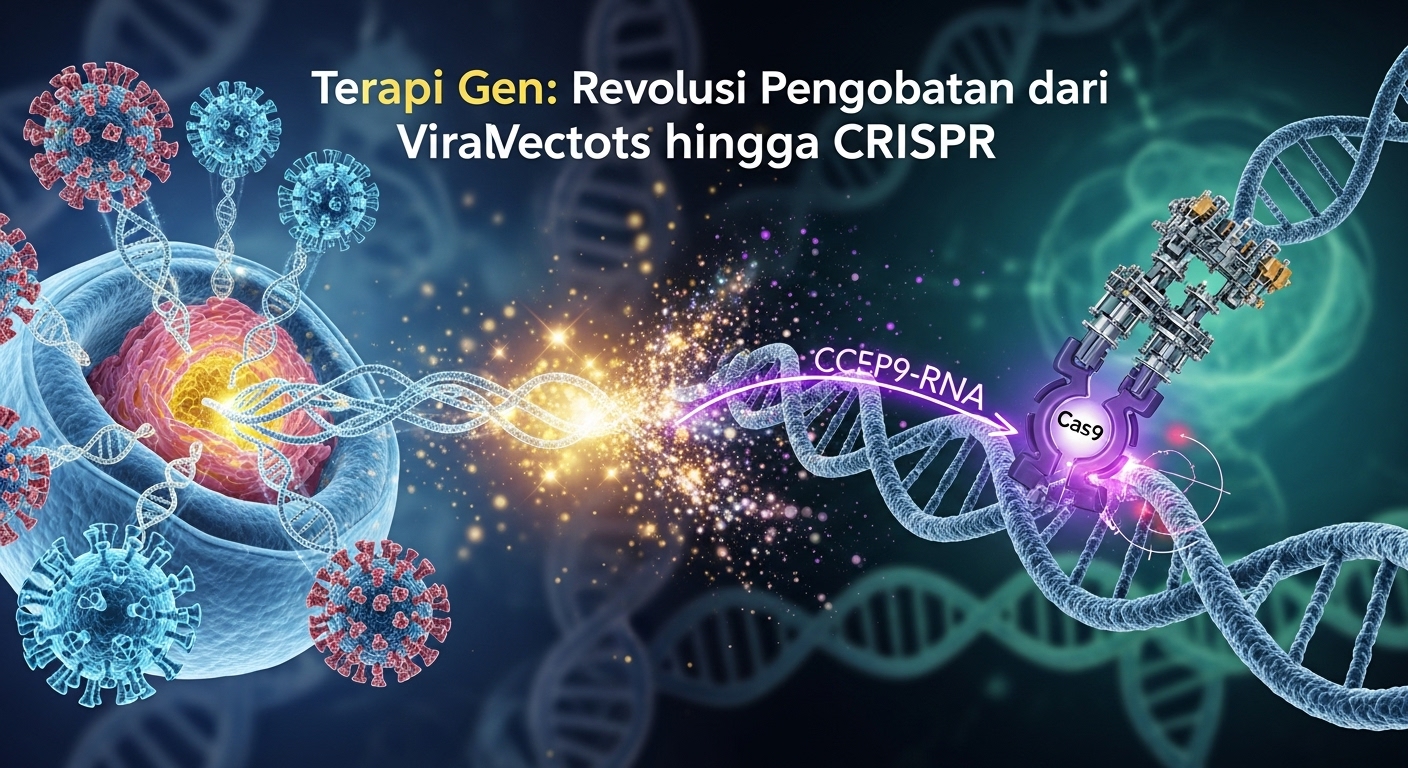
Terapi Gen: Revolusi Pengobatan dari Viral Vectors hingga CRISPR
Mengeksplorasi perkembangan pesat terapi gen yang memanfaatkan virus dan teknologi editing genetik untuk menyembuhkan penyakit pada level DNA.
Terapi gen merepresentasikan paradigm shift fundamental dalam pengobatan - alih-alih treating symptoms atau managing disease, kita kini dapat memperbaiki underlying genetic defects yang menyebabkan penyakit. Teknologi ini, yang dulunya science fiction, telah menjadi clinical reality dengan beberapa gene therapies sudah approved dan banyak lagi dalam pipeline.
Konsep Dasar Terapi Gen
Terapi gen adalah introduction, removal, atau alteration dari genetic material di dalam cells untuk treat atau prevent disease. Approach paling common adalah menambahkan functional copy dari gene yang mutated atau missing. Ini particularly useful untuk monogenic diseases dimana single gene defect responsible untuk seluruh condition.
Delivery dari genetic material ke target cells adalah challenge utama. DNA atau RNA harus tidak hanya masuk cells tetapi juga reach nucleus, evade cellular defense mechanisms, dan dalam beberapa kasus integrate into genome untuk long-term expression. Various delivery vehicles atau vectors telah developed untuk achieve ini.
Ex vivo versus in vivo approaches represent different strategies. Ex vivo therapy involves removing cells dari patient, modifying mereka di laboratory, kemudian returning modified cells. In vivo therapy delivers therapeutic genes directly into patient’s body, targeting specific tissues atau organs. Each approach memiliki advantages dan challenges.
Viral Vectors: Memanfaatkan Musuh
Virus, yang naturally evolved untuk efficiently deliver genetic material into cells, repurposed sebagai gene therapy vectors. Different virus types memiliki characteristics yang make mereka suitable untuk different applications. Genes yang code untuk viral replication removed dan replaced dengan therapeutic genes.
Adeno-associated virus (AAV) adalah workhorse dari current gene therapy. AAV naturally infects humans tanpa causing disease, can infect dividing dan non-dividing cells, dan doesn’t integrate into genome (reducing insertional mutagenesis risk). Different AAV serotypes have tropism untuk different tissues - AAV2 untuk CNS, AAV8 untuk liver, AAV9 crosses blood-brain barrier.
Lentiviral vectors, derived dari HIV, efficiently transduce non-dividing cells dan integrate into genome untuk stable long-term expression. Used primarily dalam ex vivo therapies seperti CAR-T cell therapy. Safety concerns tentang HIV-derived vectors largely mitigated karena replication-incompetent nature dan multiple safety features.
CRISPR: Precision Genome Editing
CRISPR-Cas9 revolutionized gene editing dengan its simplicity dan versatility. System consists of Cas9 nuclease yang cuts DNA dan guide RNA yang directs Cas9 ke specific genomic location. This enables precise editing - bisa knock out genes, correct mutations, atau insert new sequences.
Base editing adalah refinement dari CRISPR yang allows single nucleotide changes tanpa creating double-strand breaks. Base editors chemically convert one base pair to another - C to T atau A to G - with high precision. Ini particularly useful untuk correcting point mutations yang cause diseases like sickle cell disease atau beta-thalassemia.
Prime editing adalah even newer technology yang can make various edits - insertions, deletions, substitutions - tanpa requiring double-strand breaks atau donor DNA template. Offers greater precision dan fewer off-target effects dibanding earlier CRISPR versions. Still dalam early development tetapi shows enormous promise.
Approved Gene Therapies
Luxturna untuk inherited retinal dystrophy caused by RPE65 mutations was landmark approval. One-time subretinal injection delivers functional RPE65 gene via AAV vector, restoring some vision di patients yang otherwise would go blind. Demonstrates proof of concept untuk treating genetic eye diseases.
Zolgensma untuk spinal muscular atrophy (SMA) adalah another breakthrough. Single IV infusion delivers functional SMN1 gene, replacing defective gene. Treated infants achieve motor milestones tidak possible tanpa therapy. Dengan price tag around $2.1 million untuk single dose, it raised important questions tentang pricing dan access.
CAR-T cell therapies seperti Kymriah dan Yescarta revolutionized treatment untuk certain blood cancers. Patient’s T cells removed, genetically engineered untuk express chimeric antigen receptor yang recognizes cancer cells, expanded, dan returned. Dramatic remissions di previously untreatable cancers, meskipun severe side effects occur dalam some patients.
Treating Hemophilia
Hemophilia gene therapy adalah success story dengan multiple approved products. Hemophilia A caused by Factor VIII deficiency, Hemophilia B oleh Factor IX deficiency. AAV vectors deliver functional clotting factor genes ke liver cells, yang kemudian produce clotting factors.
Single infusion dapat eliminate need untuk regular factor infusions yang patients previously required throughout lives. Bleeding episodes dramatically reduced. However, expression levels vary antar patients, dan durability remains question - some patients see declining expression over years.
Immune responses terhadap AAV capsid atau expressed clotting factors can be problematic. Pre-existing antibodies terhadap AAV dari natural exposure can prevent successful transduction. Immune responses dapat also reduce expression over time atau prevent re-dosing jika needed.
Sickle Cell Disease dan Beta-Thalassemia
Ex vivo gene therapy untuk sickle cell disease (SCD) dan beta-thalassemia shows remarkable results. Patient’s hematopoietic stem cells collected, modified dengan lentiviral vectors untuk express functional hemoglobin atau fetal hemoglobin, kemudian reinfused after conditioning chemotherapy untuk make space dalam bone marrow.
Casgevy, which uses CRISPR untuk increase fetal hemoglobin production, recently approved di UK dan US. BCL11A gene editing diactivates repressor dari fetal hemoglobin, allowing adult patients untuk reactivate fetal hemoglobin production yang compensates untuk defective adult hemoglobin.
These therapies potentially curative untuk diseases yang previously required lifelong transfusions atau had severe complications. Namun, process requires intensive conditioning chemotherapy dengan associated risks, lengthy hospital stays, dan costs di hundreds of thousands of dollars.
Challenges dalam Delivery
Achieving therapeutic levels of gene expression dalam right cells at right time adalah complex. Too little expression ineffective, too much dapat toxic. Controllable expression systems yang can be turned on atau off by external signals sedang developed tetapi add complexity.
Immunogenicity dari vectors atau expressed proteins major hurdle. Immune system may recognize vector capsid sebagai foreign, preventing successful transduction atau eliminating transduced cells. Immunosuppression dapat help tetapi has own risks. Engineering less immunogenic vectors ongoing area of research.
Off-target effects, particularly dengan CRISPR, adalah concern. Guide RNAs may direct editing ke unintended genomic locations dengan similar sequences. Extensive screening untuk off-target effects done dalam development, tetapi comprehensive assessment challenging. Improvements dalam guide RNA design dan Cas variants reducing off-target rates.
Cancer Gene Therapy
Oncolytic viruses engineered untuk selectively infect dan kill cancer cells while sparing normal cells adalah promising approach. Talimogene laherparepvec (T-VEC), modified herpes simplex virus, approved untuk melanoma. Virus replicates dalam tumor cells, causing cell lysis, dan also stimulates anti-tumor immune response.
Gene therapy dapat also enhance immune system’s ability untuk fight cancer. Besides CAR-T cells, tumor-infiltrating lymphocytes dapat be expanded ex vivo dan genetically modified untuk enhance their cancer-killing ability before reinfusion. Checkpoint inhibitor genes dapat be delivered untuk overcome tumor immunosuppression.
Suicide gene therapy involves introducing genes yang make cancer cells sensitive to otherwise non-toxic drugs. Herpes simplex virus thymidine kinase gene makes cells sensitive untuk ganciclovir. After gene delivery ke tumor, administration of drug kills transduced cells. Can provide bystander effect killing nearby untransduced tumor cells.
Neurological Diseases
Central nervous system particularly challenging target untuk gene therapy karena blood-brain barrier limits vector delivery. Intrathecal atau direct brain injection dapat bypass barrier tetapi invasive. AAV9 dan some engineered AAV variants can cross BBB after IV administration, enabling less invasive delivery.
Zolgensma untuk SMA demonstrates feasibility dari treating neurodegenerative diseases dengan early intervention. Gene therapy untuk other conditions seperti Huntington’s disease, Parkinson’s, atau Alzheimer’s dalam various stages of development. Challenges include targeting multiple brain regions, avoiding neurotoxicity, dan achieving sustained expression.
Gene therapy untuk inherited retinal diseases shows particular promise. Eye adalah relatively privileged site immunologically, small volume requires less vector, dan outcomes easily measured. Multiple therapies untuk different forms of inherited blindness dalam development beyond Luxturna.
Ethical Considerations
Germline editing - modifying genes dalam embryos atau germ cells sehingga changes heritable - highly controversial. While could eliminate genetic diseases dari families, raises concerns tentang unintended consequences, equity, dan “designer babies.” Currently prohibited untuk clinical use di most countries.
He Jiankui’s creation of gene-edited babies di China in 2018 sparked global outcry. Editing CCR5 gene untuk confer HIV resistance done without proper oversight atau consent, dengan unknown long-term effects. Led untuk calls untuk international moratorium dan stricter regulations on germline editing.
Access dan equity major concerns. Gene therapies extraordinarily expensive - prices dalam millions untuk single treatment. Insurance coverage varies, dan many patients globally have no access. Questions tentang who gets these therapies dan whether society can afford untuk provide them untuk all who need.
Manufacturing Challenges
Producing viral vectors at scale untuk commercial gene therapy manufacturing challenge. Requires highly specialized facilities, stringent quality control, dan significant capital investment. Current capacity insufficient untuk meet growing demand sebagai more therapies approved.
Patient-specific manufacturing untuk ex vivo therapies like CAR-T adds complexity. Each batch is unique untuk individual patient, requiring careful tracking dan quality control. Mistakes dapat be fatal. Supply chain logistics ensure cells returned ke correct patient critical.
Cost of goods untuk gene therapy production very high, contributing untuk final prices. Efforts untuk develop more efficient production methods, standardize processes, dan leverage economies of scale ongoing. Novel manufacturing platforms like transient transfection atau stable producer cell lines being explored.
Regulatory Framework
Regulatory agencies developed specific frameworks untuk gene therapy assessment. FDA’s Cellular, Tissue, dan Gene Therapies Advisory Committee reviews gene therapy applications. Emphasis on demonstrating safety, particularly long-term safety, karena irreversible nature dari many interventions.
Long-term follow-up studies required untuk monitor durability of response dan late-emerging adverse effects. Some studies require 15 years of follow-up. This creates challenges untuk manufacturers yang must maintain infrastructure untuk tracking patients over extended periods.
Adaptive trial designs dan accelerated approval pathways utilized untuk serious conditions dengan unmet needs. Surrogate endpoints may be accepted untuk initial approval dengan confirmatory studies ongoing. Balances urgent need untuk effective treatments dengan maintaining safety standards.
Insurance dan Reimbursement
Payers grappling dengan how untuk reimburse one-time curative therapies dengan multimillion-dollar price tags. Traditional models based on ongoing treatments don’t fit well. Outcomes-based agreements dimana payment contingent on therapy success being explored.
Installment payments atau annuities spread costs over years proposed sebagai alternative untuk large upfront payments. However, administration complex particularly jika patients switch insurance providers. Some manufacturers offering rebate atau refund jika therapy doesn’t work as intended.
Value assessment frameworks attempting untuk quantify long-term benefits versus costs. For conditions requiring lifelong treatment, one-time gene therapy may actually be cost-effective over patient’s lifetime despite high initial cost. However, budget impact pada payers dalam short term remains significant concern.
Future Directions
In vivo CRISPR therapies delivering editing components directly into patients being developed. First in-human trials untuk transthyretin amyloidosis dan Leber congenital amaurosis show early promising results. If successful, could expand treatable conditions beyond those amenable untuk ex vivo approaches.
RNA-based therapies including mRNA vaccines gained prominence during COVID-19 pandemic. Lipid nanoparticles efficiently deliver mRNA, causing cells untuk temporarily produce therapeutic proteins. Advantages include not integrating into genome, transient expression, dan rapid development cycles.
Multiplexed gene editing untuk correct multiple genetic defects simultaneously atau engineer complex cellular behaviors akan expand therapeutic potential. Combining gene therapy dengan other modalities seperti small molecules atau immunotherapies could enhance efficacy. Personalized gene therapies tailored untuk individual patient’s specific mutations ultimate goal.
Komentar